1/23/2011

Philadelphia women Working in Glass Exhibition


Thursday, January 13- February 11, 2011
Location: Lawrence Gallery, Rosemont College
Curated by Lucartha kohler

“Philadelphia Women Working in Glass,” will feature works from Anna Boothe, Amber Cowan, George-ann Greth, Jessica Jane Julius, Lucartha Kohler (curator), Paula Mandel, Emma Salamon, Gabrielle Miles Silverlight, and Celeste Starita.

To read more about the exhibition go to this link- Exhibition


10/03/2010

Join me for-POST: Philadelphia Open Studio Tour

VISIT MY STUDIO on OCTOBER 9-10 -(Saturday and Sunday)
open from noon-6pm


1441 South 8th street, 1st floor, philadelphia pa
Come see new work and work in progress.

Join me for the largest annual tour of visual artists in the region and the only event of its kind in the city. Studio tours east of broad street are free, open to the public, self-guided, and run from noon-6pm.

Featuring live music from Little Brown Chair.


7/17/2010

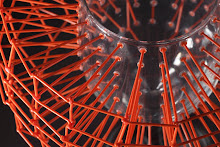
Work from "Blurring the Subject" Series

This is new work in the series called "Blurring the Subject".
It is lampworked orange bullseye glass.


7/16/2010

The Labor of Craft

This is the beginning of a new series of work, titled "The Labor of Craft"


6/06/2010

Check out my web-site

at jessicajanejulius.com

Intersection: Work from the Sutherland Artist-in-Residence Series


"Blurring the Subject" lampworked orange bullseye glass, 2010

University of Louisville's Cressman Center

June 4 – July 10, 2010

Reception: Friday, June 4, 6 – 9 p.m.


The Sutherland Endowed Chair in Glass lecture series seeks to further the field of glass art by creating a link between the artist’s studio practice, U of L students, and the public. The Sutherland Series fosters innovation by providing professional artists with a working environment that is conducive to creativity and free of distractions. Students are provided the opportunity to work hands-on with professional artists in the creation of their work, while the community is invited to enjoy insight into the spectacle of the creative process. This exhibition will showcase the work of a number of former Sutherland Artists-in-Residence.

Former artists include- Kana Tanaka, Einar de la Torre, Jamex de la Torre, Daisuke Shintani, Atsuko Tajima, Densaburo Oku, Jon Clark, Therman Statom, Shane Fero, Nancy Callan, Jessica Julius, Erica Rosenfeld, Richard Jolley, John Miller, and Ed Hamilton.


TV Dinner- Urban Glass- 2009

Chicken Bubble
Soda Pop
Emma Salamon Mixed Veggies

TV Dinner- GAS Conference 2009 Corning


Recliner Bench
TV Tower

Apple Cobbler

Cocktail Party- Urban Glass

Buttermilk Fried Chicken cooked in hot glass bubble

Erica Rosenfeld Cooking Steak on hot glass
Skitch Manion ladling into Chandelier

3/24/2009

Rose Lehrman Arts Center


"Tactile 13" Cast and silvered glass

Contemporary Glass
Angus Powers, Jessica Julius & Ché Rhodes
through April 8, 2009

Reception: Thursday, April 2, 5:30-7 pm

Crossing Lines- DCCA


"Boundaries" Photogram of artist saliva

Crossing Lines: 2009 Members’ Juried Exhibition
February 27 – May 24, 2009
Guest Juror: Darsie Alexander
Chief Curator, Walker Art Center, Minneapolis

Carole Bieber & Marc Ham Gallery
at Delaware Center for Contemporary Arts


9/02/2008

New Scribble Piece


This is the beginning of new scribble pieces, I am fusing some of the scribble flat in an attempt to control part of the chaos. This is just the first piece, many more to come.

8/02/2008

The Burnt Asphalt Family- Mission Statement by Jessica Jane Julius


Statement: The Burnt Asphalt Family

By nature and necessity, traditional glassblowing is a fairly egoless endeavor. It is a collaborative process in which the creators identities are subsumed by the communal sweat and effort required to make a single object. Our concern is not in creating objects or destroying them but in demonstrating various properties and capabilities of glass through teamwork. We do not disregard traditional glassblowing but use it’s techniques to create forms to cook food, for example the hot glass dome that was placed over the turkey in “Turkey Dinner” aided in containing heat around the turkey in order to cook it. We use glass to function as cooking elements, referencing the ritual of eating a meal. However the creation of the work happens in a moment of interaction with our audience.

Our inspiration comes from American Society in the 1950s, which was much stricter and very structured. Society Rules were important not to be broken, there were no shades of gray, everything was black and white. Men did the lawn, took out the trash, fixed things, drove the car on family outings, and supported the family and women stayed at home to cook, clean, and take care of the family. In advertisements, TV shows and movies, the housewife is pictured perfectly well groomed as she is vacuuming, dusting, and cooking. The Betty Crocker cookbook and anything BBQ’D was the trend of the food in the 50’s, were the family meal times were an important part of bringing everyone together. It was an era of trying to keep up appearances of the perfect family. In response to that family ideal, we create the appearance of a well-orchestrated performance that investigates gender roles, family characters, and glass making while using the hot shop as our stage. Our goal is to create something temporary and ephemeral in nature that exist only by being recorded, similar to a moment in everyday life. The props and décor of the space add to the theatrical nature of the performance, which expands on the already exciting and mesmerizing nature of glass. Our audience are people both familiar and non-familiar with the medium and through the ritual of cooking, serving, and eating are brought together. This performance is a merge between a glass demo, a play, and an actual family dinner, meal, or event shared with the audience.

“The Burnt Asphalt Family” began as a collaboration at The Creative Glass Center of America between a group of all woman fellows, Jessica Jane Julius, Erica Rosenfeld, Maret Sarapu, Sara Gilbert and two other artists Sam Geer, and Skitch Manion. Art making normally has a strong sense of individualism but in glassblowing you normally rely on at least one partner if not more. Collaborating gives us access to greater resources of materials, experience, knowledge, and skill. CGCA created an environment that was conducive to collaborating through supporting the discovery of our new vision with the resources and opportunity to focus on its development. The first performance was “Turkey Dinner”, performed at Wheaton Arts, summer 2007. After Wheaton, the performances served to reunite us and to bring new people into our family. It has been a way for us to stay connected and creative in ways outside of our normal lives as artists while still sharing a love of glass. The second performance was an evolved “Turkey Dinner” which was performed at Urban Glass in Brooklyn NY in November of 2007. Some family members such as Maret, who resides in Estonia, were not able to participate while new members joined our family, such as Emma Salamon, Dena Pengas, Deborah Czersko, Adam Holtzinger, and Leo Tecosky. The third performance was the “Garden BBQ” at Urban in May 2008. This time members again were added while others could not participate. It is an evolving group of artists all interested in exploring new ways of working with glass. We are now planning for the next performance in 2009 at GAS conference in Corning NY, “TV Dinner.”

by Jessica Jane Julius

7/28/2008

The Torpedo Space

   
Entering the space, to the left we built walls so we can have three individual spaces and two shared spaces.
   
My messy space, trying to get it organized and get everything in there. It is a long hard process for me and my organizational skills.
  
The future coldshop and wood shop with the bathroom to the right.
    
Emma's space and our future gallery space.
The lovely green door in the back with a small "man door" in it.


Here are some picts from my new studio space in south philly, on 8th and Tasker, shared with two other artists. It used to be a door factory and then was bought and made into studio's and living spaces. This is still the beginning, we plan to have a small gallery space, a small coldshop, and small woodshop. I will keep updating new picts as it moves along.

7/25/2008

Art Critic Robin Rice wrote an Essay from an interview with me during my fellowship at wheaton arts

“We all need to understand why we are here; why we exist and how we exist,” observes Jessica Julius, a Spring 2007 Resident Fellow at the Creative Glass Center of America. Yet her work suggests that although she finds this question endlessly intriguing, it is one to which she does not postulate or expect a definitive answer.

The idea of an evolving truth makes sense in the context of Julius’s on-going interest in science, especially physiology, an area of study which is never exhausted as each answer gives rise to new questions. In various ways within her work, Julius consistently juxtaposes the specificity of scientific observation with the mundane sometimes inchoate perceptions of lived experience. This disjuncture of perceptions is manifested in the silvery glass models of eyes to which she attached false eyelashes: silly yet rigorous and, yes, eyes in which we see distorted reflections of our own eyes.

Julius’ 2006 MFA from the Rochester Institute of Technology, followed up on studies of glass at Tyler and Pilchuck. At RIT she moved “beyond the limited vocabulary of just the material [glass]” to concentrate on photography, though mostly of glass. Perhaps not coincidentally, both fields can be expressive and are inevitably technically driven. Julius utilized glass with photography throughout her graduate exhibition “Static Synapse.” Some glass images were cast from the body, a technique which in this context functions as a primary layer of imprinting. She then photographed or printed the casts as photograms.

The mouth, Julius notes, can be “disgusting, beautiful and humorous,” qualities which make it a flexible, multi-faceted subject. She used a negative cast of her own as the basis of photograms. The witty, Clenched, a 5’ long repeating row of teeth cast in glass sandwiched between horizontal red lips, tells a story or perhaps half a dialogue.

Arbitrarily reorganized body fragments, illustrate Julius’ interest in morphological and physiological categories. Where does the finger end and the palm begin? In addition to differently organized categories, Julius is engaged by “rules about how things should look.” One of her installations in “Static Synapse” combined casts of “hybrid” fingers and parts of hands with site specific drawing. Photograms of these cast elements are labeled as if for scientific study.

Inspired by a sick cat, the “Spit Print Series,” combines her interest in the mouth with the observation of the ephemeral and of transformation over time. Julius drooled onto a sheet of glass and used the bubbly saliva as the basis of a photogram. The prints provocatively preserve and make beautiful something useless — even repulsive (once it’s left the mouth).

Julius recognizes an element of nostalgia in the most ambitious project she tackled during her CGCA fellowship. With it, she moves from the body as a subject to a focus on “how we experience things.” She made molds of old milk bottles from pastoral York, PA, in order to make new glass bottles in the same pattern. The original “artifacts that represent people and history” were made for the Julius Dairy, a well-documented business which belonged to her family. Her father has around fourteen different bottles from the dairy. Bottles from the Shepard Dairy are owned by a grandmother’s family; Julius may also reproduce those. She hopes to locate the factory where the bottles were made and incorporate this information somehow in an installation.

She will make at least one bronze mold into which she will blow as many as 1,000 bottles, probably in white glass. She may also cast them experimentally in other materials, but probably not at CGCA. The range of casts will include a negative bottle in a box. For one installation, she plans a yard-high pyramid of bottles, as they might have been once displayed.

The installation and narrative suggested by the bottles may be shown at the York Historical Society, but Julius also views the milk bottle as an extension of her on-going interest in morphology and taxonomy. She wants to think about containers and “how we contain things,” as a broader category

Relating to her family but in a more contemporary and personal way, Julius is experimenting with glass parachutes. Small and light, they will be functional, at least until they touch down. They are designed to “sacrifice themselves to protect the object” they carry. This project relates to Julius’ brother who is currently completing his third tour of duty in Iraq. “Every day has its emotional weight,” she says.

Julius sees her residency as an opportunity to experiment. “Since grad school I’ve wanted to say more. Now I can say ‘I feel like doing this so I’m going to.'"

7/24/2008

Hybrid- cast glass finger installation


The work "Hybrid" consists of opaque black glass fingers and a data system of rub-on-letters. Through isolating a part of the body, it becomes a foreign object however recognizable. The finger focuses on the action of touching, pointing, and defining information and represents our tactile experience. The small objects have characteristics of actual fingers through, realistic size, fingerprints, and quality of skin. They are placed on the wall in a way where they are pointing or containing parts of the data, representing an act of touch and inquiry in the same way we learn about the world through touch. Through the interface of the objects with the numbers, letters, and symbols the work talks about how we categorize, focus, and analyze with the use of technology, data, and systems. The impermanency of the work stresses the changing of information through time and how our systems change with new information and new discoveries.